
- July 13, 2026
Why Teaching Methodology Matters in International Schools in India
Guide to Sections
- Introduction
- Quick Highlights
- Setting Global Education Standards Through Active Learning
- The Strategic Shift in Classroom Design
- Building 21st-Century Learning Skills
- The Value of a Holistic Education Approach
- Long-Term Academic Performance and Higher Exam Scores
- International Projects and Cross-Border Classrooms
- Choosing the Right Path for Your Child
- FAQ's
Why do some students easily apply their classroom knowledge to unexpected real-world problems while others panic the moment an exam question leaves the textbook? The answer lies entirely in how teachers run their classrooms every day. Traditional schooling heavily rewards static memorization, but modern global platforms require actual conceptual understanding. Selecting among International schools in India means looking past grand buildings to study daily instructional techniques. A modern teaching methodology completely changes how teenagers absorb, process, and retain information for the rest of their lives.
Quick Highlights
Vandya International School being the top international school in India, has completely eliminated passive classroom learning to avoid the freezing of mind resulting from passive learning in advanced testing situations. The classrooms employ interactive experiments and international cooperation to inspire intellectual passion. This active classroom learning helps to develop key 21st-century skills for your child through time management lessons and data analysis expertise. With this practical approach to classroom learning, you can be sure of memory retention, hence better test results without any anxiety.
Setting Global Education Standards Through Active Learning
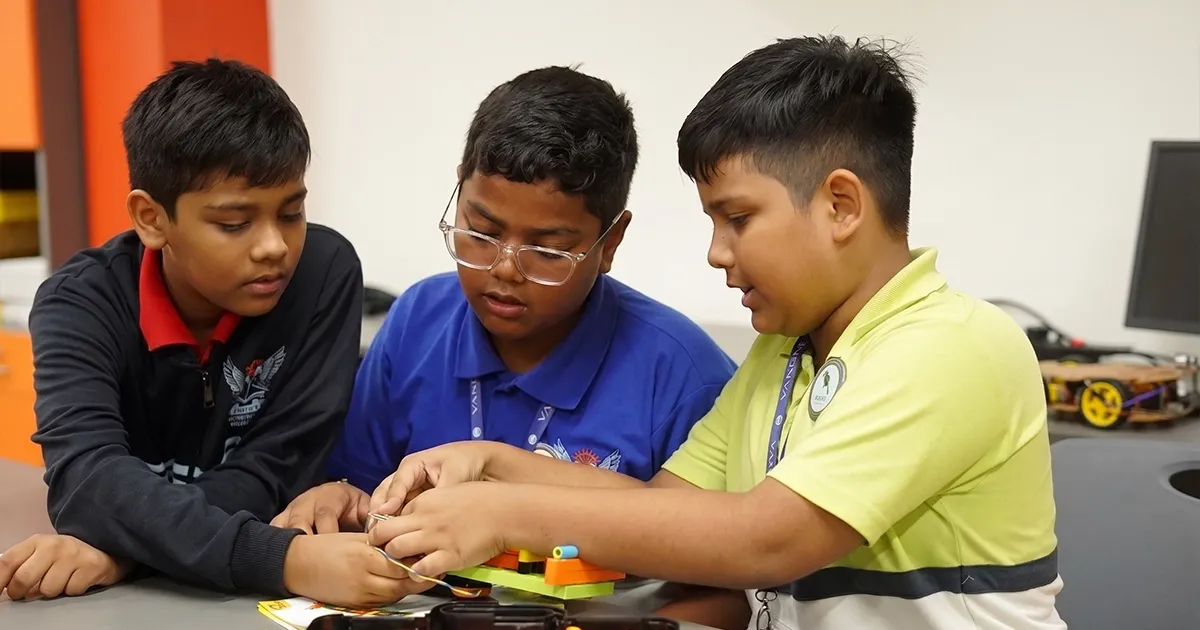
Elite International Curriculum schools do not expect children to sit quietly and copy notes from a whiteboard for hours. Instead, they structure daily lessons around student-led investigations and collaborative problem-solving tasks. This specific operational shift forces children to take full ownership of their intellectual growth. For example, a geography class tracking weather patterns will analyze live satellite data rather than reading old charts.
Such instruction will make sure that local classrooms meet the high standards of education around the world. They will learn how to argue their positions and examine their information objectively. Therefore, they will become engaged in their intellectual growth process.

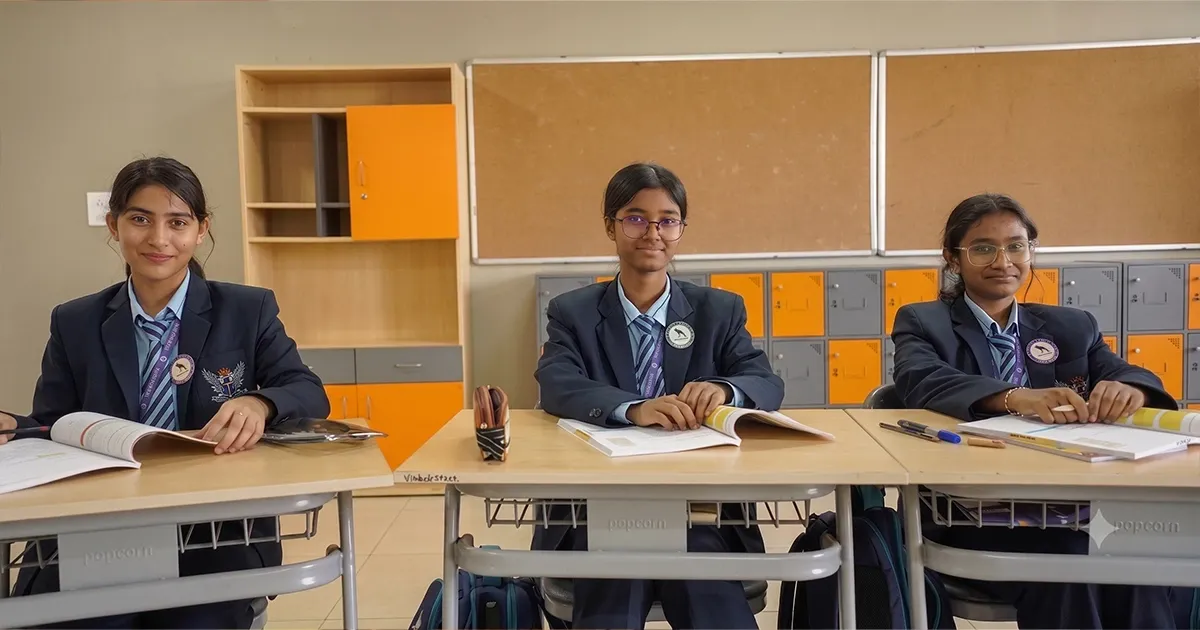
When you walk into a classroom at Vandya International School, you notice the desks are arranged to support constant teamwork. Students spend less time listening to lectures and far more time arguing points, testing theories, and building things. This structural difference alters how knowledge settles in a child’s mind. They do not just memorize facts to pass a temporary test on Friday morning. They master the underlying logic of the subject matter.
The Strategic Shift in Classroom Design
To understand why this matters, look at how the entire learning environment changes when you move from an old-school lecture hall to a modern setup. The core tracking metrics show completely different daily realities for a student.
- Desk Work: Conventional setups force children to sit quietly and copy lectures for hours. At Vandya International, teams actively debate facts and handle actual field data to find solutions.
- Lesson Setup: Older methods keep topics completely separate with zero crossover between subjects. Modern teaching merges science, math, and history inside single, multi-layered tasks.
- Grading: Traditional success is solely based on written examinations which tested mainly how much information a student has retained. At international curriculum schools, teachers grade logical reasoning, presentation, and lab skills all through the year.
- Mental Attitude: Traditional methods revolve around memorizing facts temporarily for a test. The international system develops problem-solving abilities which work effectively under deadline pressure.
Building 21st-Century Learning Skills
Modern professional employment requires a completely different cognitive toolkit than what worked thirty years ago. Employers no longer value people who merely store static facts because basic internet search tools handle data retrieval instantly. The best international schools in India focus heavily on building 21st-century learning skills like media literacy, flexible thinking, and clear teamwork.
Engagement in group assignments helps young people learn how to plan their day without their parents’ intervention. They also gain the ability to change their approach when there is inconsistency between sources, as well as when there is difficulty accessing information. Thus, all of these daily occurrences in the classroom lay down the most important basis for professional life.
This specific routine prepares your child for the self-directed environment of top-tier universities. Professors look for students who can design their own research papers, verify source credibility, and defend an original thesis. By mastering these independent work habits in high school, your child completely avoids the common first-year university slump. They already possess the executive functioning skills needed to thrive under pressure.
The Value of a Holistic Education Approach
True academic excellence connects physical, emotional, and intellectual development into a single framework. A holistic education approach balances intense science labs with competitive sports, creative arts, and community service projects. This varied environment teaches young minds to see links between completely different areas of human thought. It prevents them from treating school as a series of disconnected chores.
At Vandya International, this balanced philosophy guides every single lesson plan. Teachers intentionally design assignments that force students to use artistic design while computing mathematical formulas. This integrated method keeps teenagers highly engaged because school work never feels like a series of boring, useless tasks. They see exactly how their daily studies relate to the wider world around them.

For instance, a project on sustainable urban architecture requires students to use geometry for structural calculations, history to study local climate adaptation, and persuasive writing to present their final proposals. This multidimensional training teaches your child to view complex global challenges from multiple perspectives simultaneously.
Long-Term Academic Performance and Higher Exam Scores
Students who acquire knowledge through practical projects score significantly higher on advanced analytical examinations. These learners do not panic when they encounter unfamiliar questions with highly complex phrasing. They understand the core reasoning behind the language because they have experimented with those concepts firsthand in a laboratory or workshop.
Continuous weekly practice with oral presentations gives these teenagers a huge advantage during final board evaluations. They build a deep, natural confidence that stays with them through university and into high-pressure careers. Traditional exam stress disappears because real understanding completely replaces the need for late-night cramming.
But the real advantage shows up during high-stakes competitive assessments. Modern international boards like Cambridge or the International Baccalaureate do not ask students to list dates or write out memorized definitions. They present unique case studies and ask students to diagnose problems based on core principles. A student trained through active learning treats these questions as a familiar puzzle rather than an insurmountable barrier.
International Projects and Cross-Border Classrooms
How do young learners build an international mindset without leaving their hometowns? The top international curriculum schools use their global networks to link local classes with peer groups in foreign countries. In these virtual sessions, children from India work directly with students in Europe or Asia to monitor global weather patterns or study international trade routes.
This steady communication helps your child meet high global education standards while remaining right here at home. They discover how to analyze small, local issues through a wide international lens. This regular practice prepares them to collaborate comfortably across cultures in the modern global economy.
Choosing the Right Path for Your Child
When evaluating potential schools, look very closely at how teachers interact with their classes. Ask administrators how they measure daily progress and how often students engage in collaborative research. The choice of teaching style will ultimately determine your child’s long-term relationship with learning.
Choosing an international teaching methodology means investing in a system that values intellectual independence over passive compliance. You ensure that your child enters the adult world with a sharp, analytical mind capable of solving complex problems. This modern preparation is what truly separates global leaders from traditional test-takers.
FAQ's
Modern instruction completely discards passive lecture tracks where children copy notes silently from a whiteboard for hours. Instead, the focus shifts entirely to active learning formats like student-led investigations, collaborative laboratory research, and cross-border academic projects. This framework forces students to analyze raw data, defend original hypotheses, and master the underlying logic of a subject rather than memorizing facts for a temporary Friday test.
Classrooms are structurally designed around extended team assignments that mimic real-world workplace environments. By managing their own project timelines without constant parental supervision, teenagers cultivate deep data literacy, flexible thinking, and independent time management. When research materials fail or primary sources contradict each other, students learn to adjust their strategies using calm logic, which forms the absolute foundation of future career readiness.
True academic excellence requires a system that connects physical, emotional, and intellectual development into a single framework. A holistic education approach balances intense science laboratory work with competitive sports, creative arts, and community service initiatives. At Vandya International, teachers intentionally design multi-layered assignments where students use artistic design while computing complex mathematical formulas, keeping teenagers highly engaged because their daily studies relate directly to the wider world.
Advanced international boards like Cambridge or the International Baccalaureate do not ask students to list simple dates or write out memorized definitions. They present unique case studies that require application of core principles under pressure. Students trained through practical projects understand the structural reasoning behind complex questions because they have experimented with those concepts firsthand, which completely removes traditional exam anxiety and late-night cramming.
A: Top CBSE Schools in Assam focus on integrated learning, mentorship systems and co-curricular pathways alongside strong academic curricula, producing balanced learners.
A: Yes. Vandya International School provides a structured day boarding programme with supervised study time, balanced meals and activity rotations.
A: Many use portfolios, competency rubrics and formative assessment to track skills like communication, teamwork and problem-solving.
A: Check supervision standards, study-time structure, meal quality, safety measures and coordination with family pickup routines.
A: Yes. Schools that emphasise holistic development offer career guidance, project-based learning and soft skills training that strengthen college applications and readiness.
A: The school maintains counsellors, mentor groups, regular check-ins and restorative practices to support student mental health.
 Call
Call
 WhatsApp
 Student Login